A social network analysis of the (STEM)2 Network model: bridging disciplinary and institutional silos
Lawrence Hobbie, Peter A. Novick, Jessica Santangelo, Amanda Turner, Eugenia Villa-Cuesta, Kate Winter, Alison Hyslop
Applied Network Science
Network design
Nodes
Forty-three faculty members from nine institutions and three STEM disciplines who joined the bounded (STEM)2 Network and met the study's participation rule.
Ties
An undirected binary connection indicated that at least one member reported a personal interaction with the other member; once reported, the connection was retained in later snapshots.
Methods
Seven cumulative whole-network snapshots; connectedness and subgroup metrics; Leiden community detection; assortativity and betweenness; randomized reference networks; and corrected nonparametric role-group comparisons.
Source: Applied Network Science
Reviewed summary
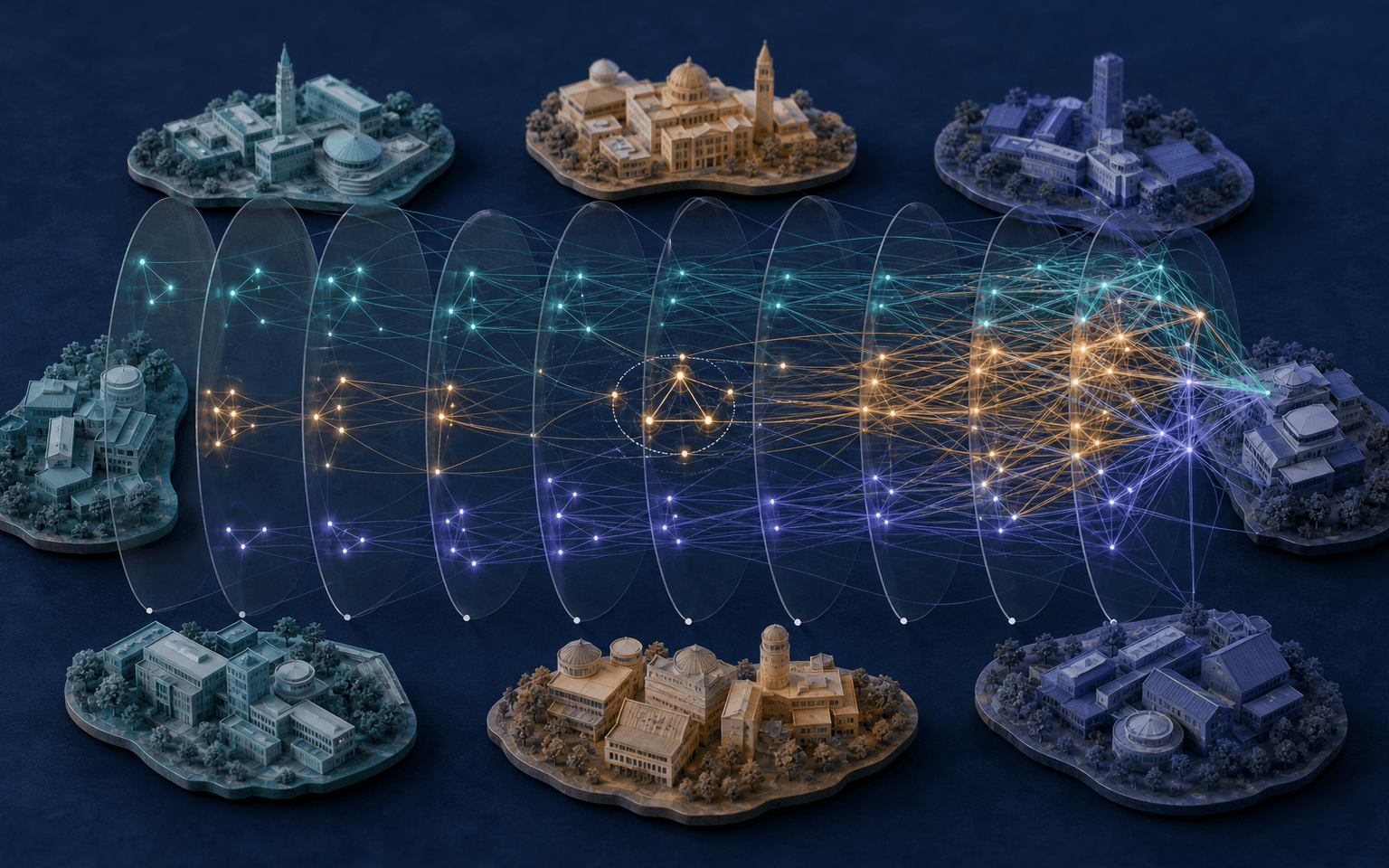
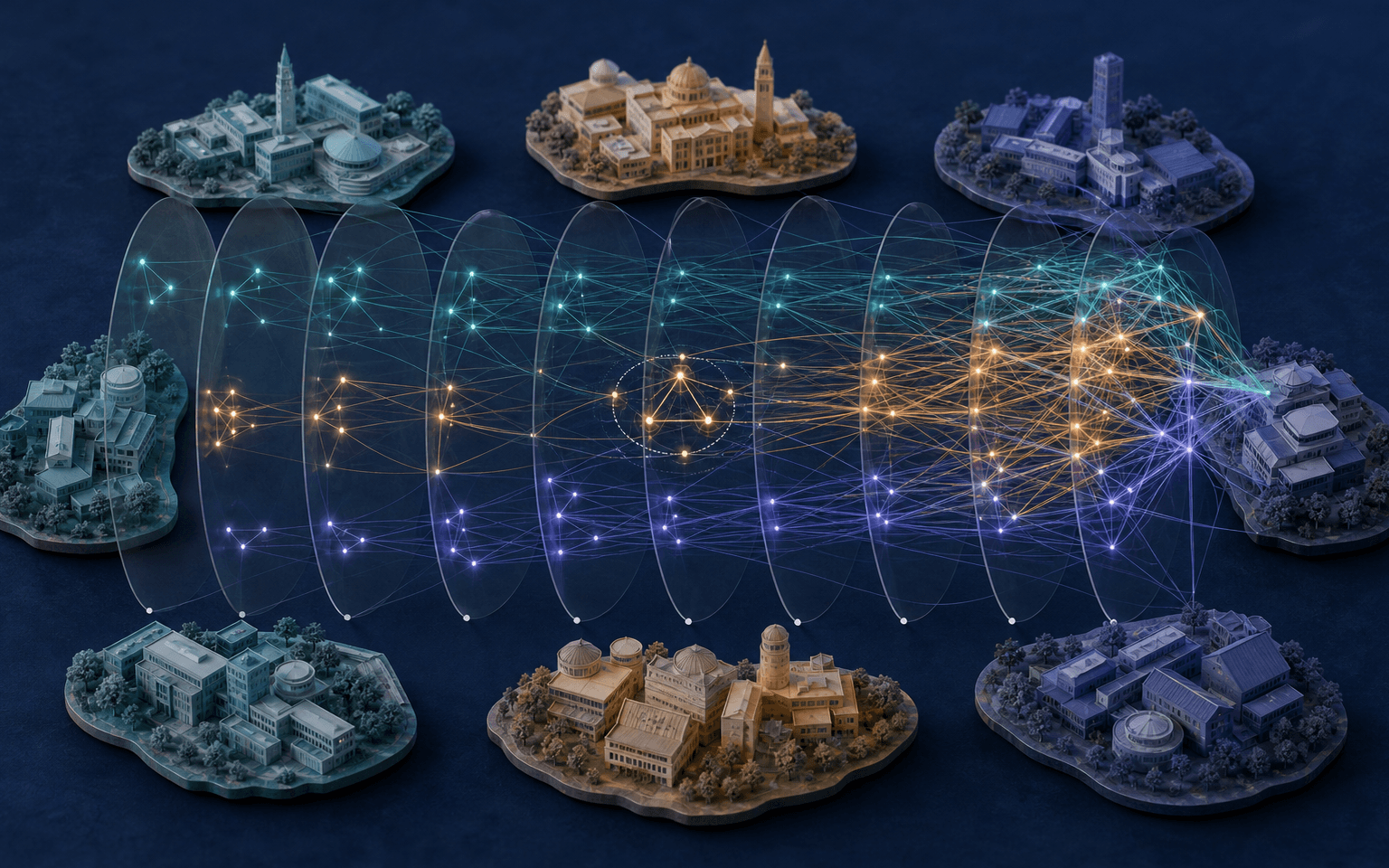
The study followed an intentionally designed faculty network that brought together biology, chemistry, and mathematics educators from nine institutions. Forty-three members who met the participation boundary completed roster-based interaction surveys at seven events across three and a half years.
Average degree more than tripled from the network's beginning, and cross-institution connections increased as institution-based assortativity declined. Multiple measures pointed to less disciplinary and institutional substructure over time, while principal investigators and co-principal investigators were overrepresented among high-betweenness bridge positions.
SNA
How SNA was used
The authors built seven cumulative, undirected whole-network snapshots from roster-based reports of personal interaction. They examined degree, density, path length, diameter, within-group and cross-group edges, the E-I index, modularity, Leiden communities, clustering, attribute and degree assortativity, betweenness, randomized reference networks, and role-group comparisons.
Source
Applied Network Science, 10, Article 63
DOI: 10.1007/s41109-025-00750-7