Social network analysis as a technology-enhanced assessment tool for collaborative skills in medical PBL
Ahmad Hathim Ahmad Azman, Nee Tiong, Mohammad Arif Kamarudin, Zamira Hasanah Zamzuri
BMC Medical Education
Network design
Nodes
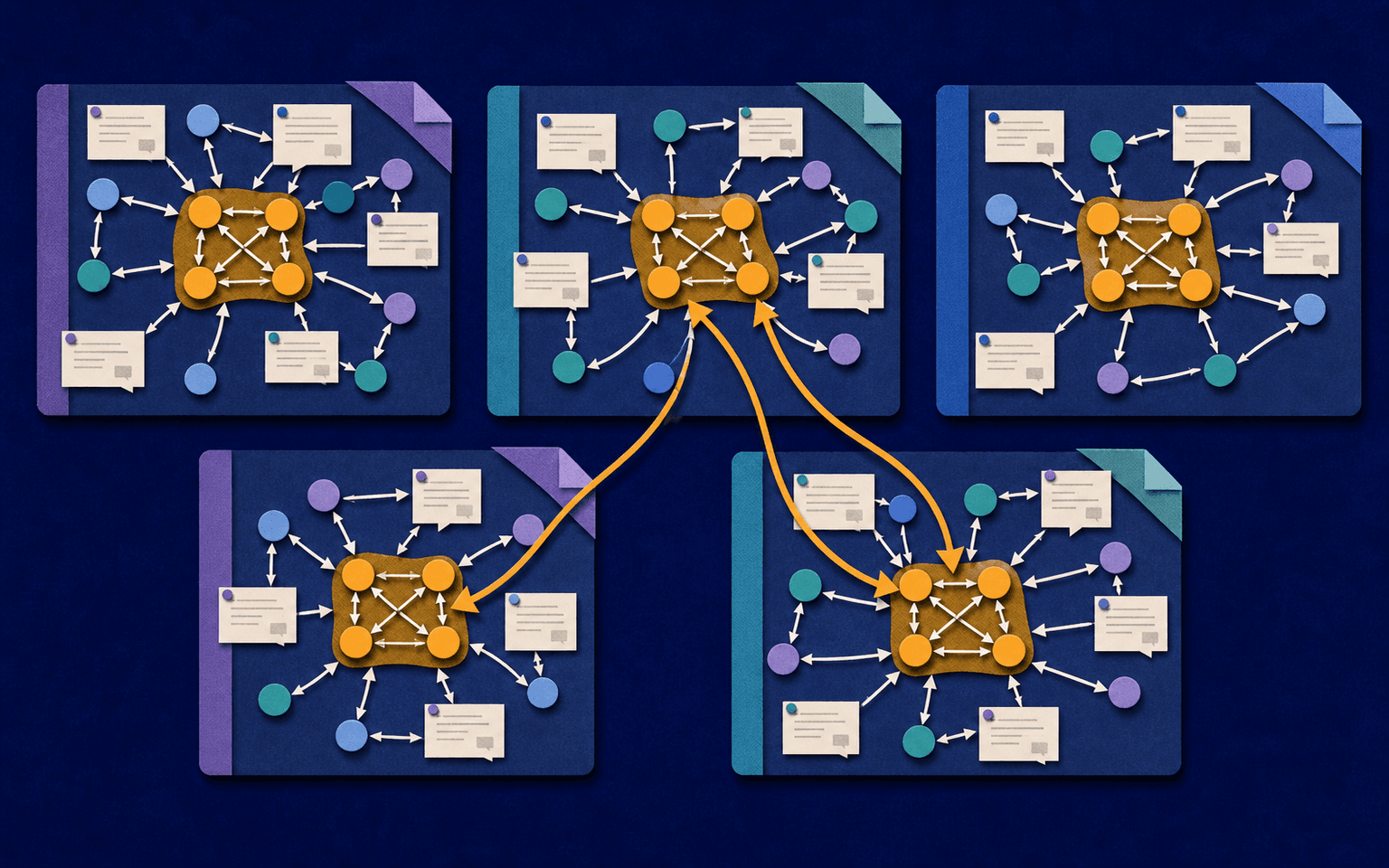
One hundred sixty-six medical students in 17 complete PBL groups, plus facilitators when at least one student nominated them as a collaborative contact.
Ties
A directed top-three nomination from one student to a peer or facilitator, weighted by an equal combination of normalized nomination rank and peer-rated collaboration quality.
Methods
Directed weighted group networks; density, average path length, transitivity, reciprocity, modularity, in-degree, harmonic closeness, and betweenness; Mann-Whitney U cohort and CGPA comparisons; and collaboration-scale reliability analysis.
Source: BMC Medical Education
Reviewed summary
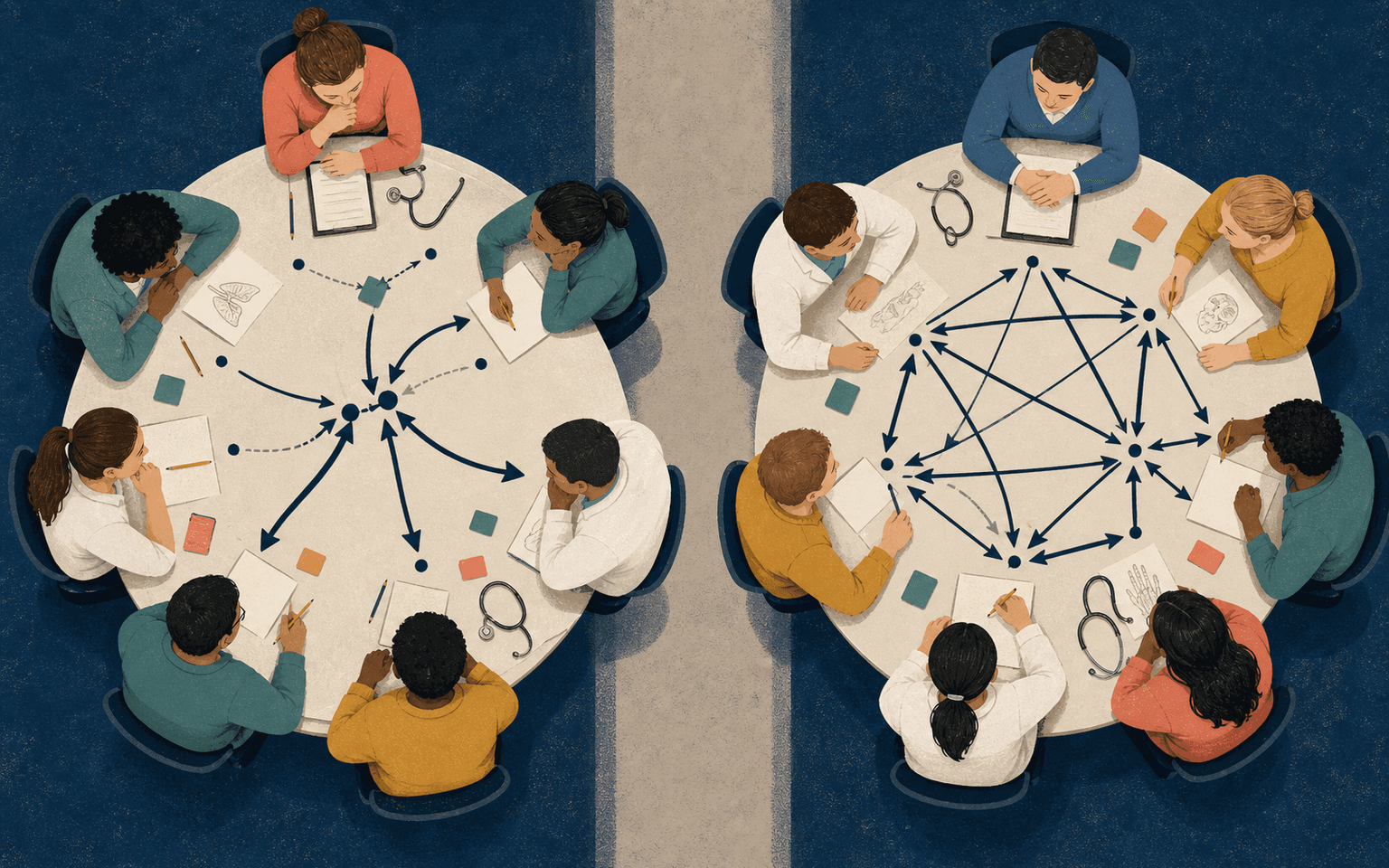
The researchers surveyed first- and second-year medical students at Universiti Kebangsaan Malaysia near the end of their 2025 terms. Although 179 of 205 eligible Year 1 students and 160 of 182 Year 2 students responded, network analysis retained only seven complete Year 1 groups with 72 students and ten complete Year 2 groups with 94 students.
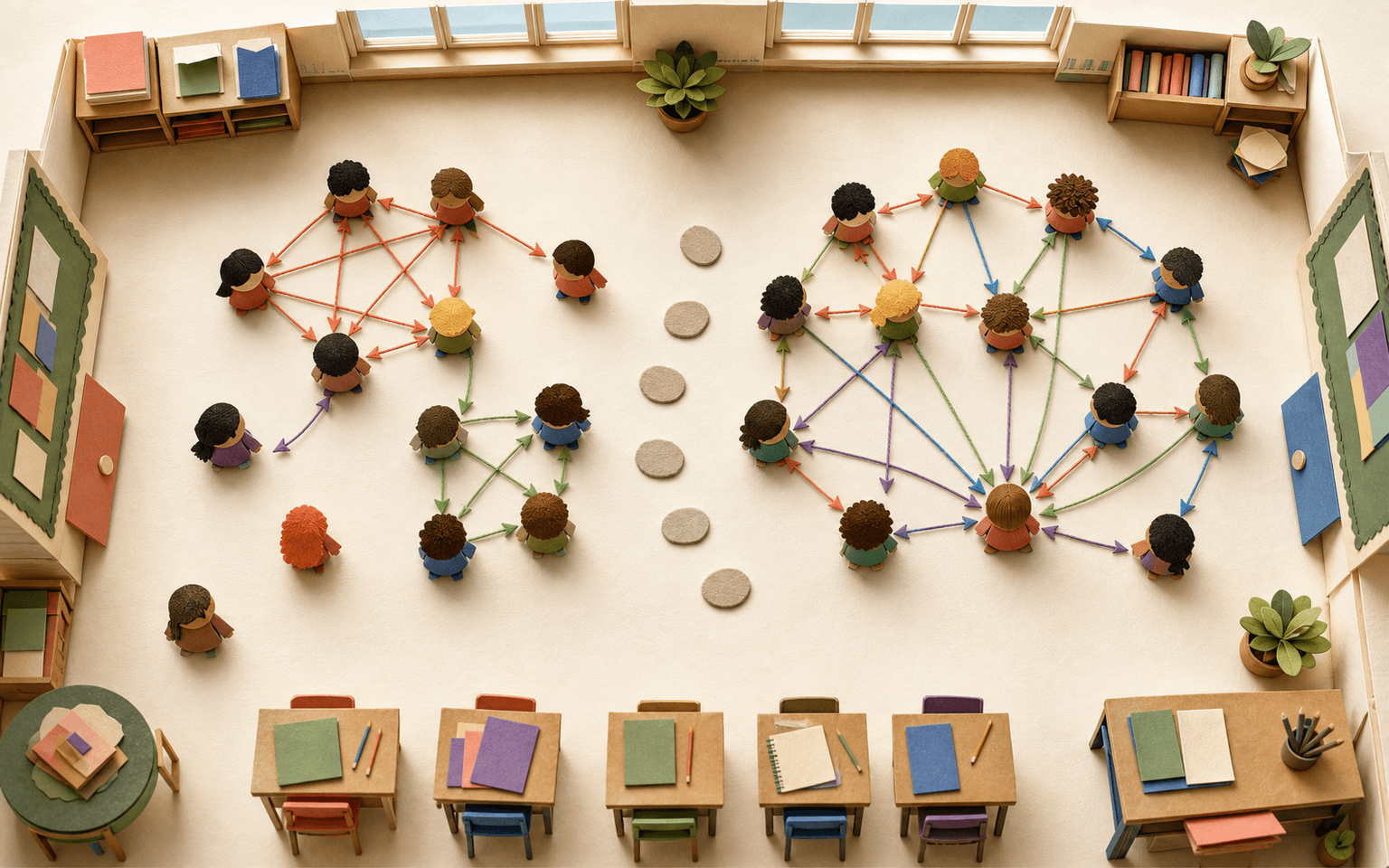
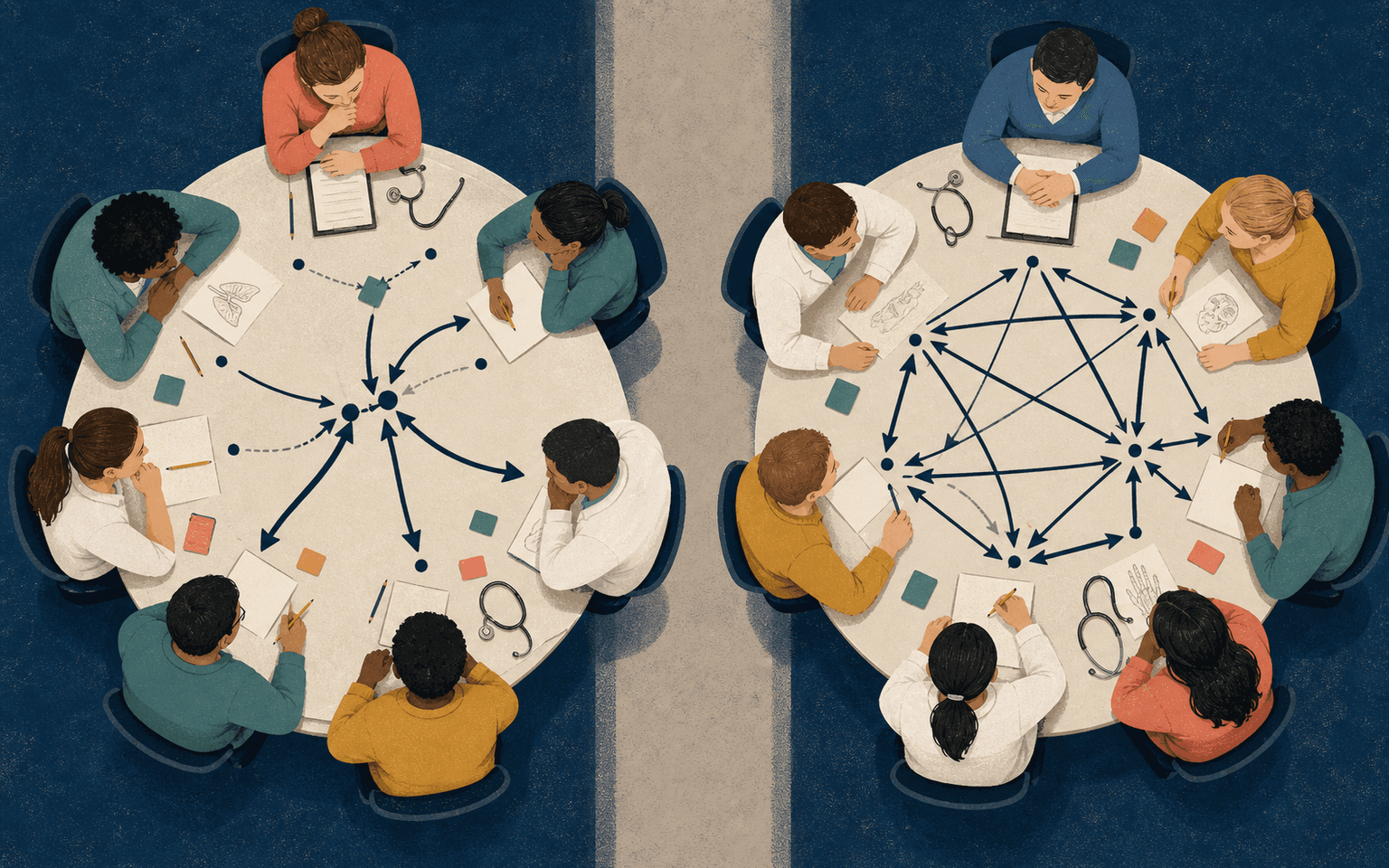
Year 2 groups had higher mean density and transitivity and shorter mean paths than Year 1 groups, while Year 1 groups showed higher reciprocity and greater reliance on brokers. Year 2 students had higher closeness and lower betweenness; only Year 2 in-degree distinguished the top three nominated students from peers on CGPA, and the cross-sectional comparison does not show that network position caused achievement.
SNA
How SNA was used
Within each PBL group, students ranked up to three peers or a facilitator with whom they interacted frequently or meaningfully and rated peer collaboration on five items. The authors built directed, weighted networks from a 50:50 combination of normalized nomination rank and collaboration score, then compared group structure, node centrality, and CGPA patterns across cohorts.
Source
BMC Medical Education, 26, Article 1056
DOI: 10.1186/s12909-026-09397-z