Linking engagement and performance through longitudinal physics classroom networks
Eric A. Williams, Justyna P. Zwolak, Remy Dou, Eric Brewe
Physical Review Physics Education Research
Network design
Nodes
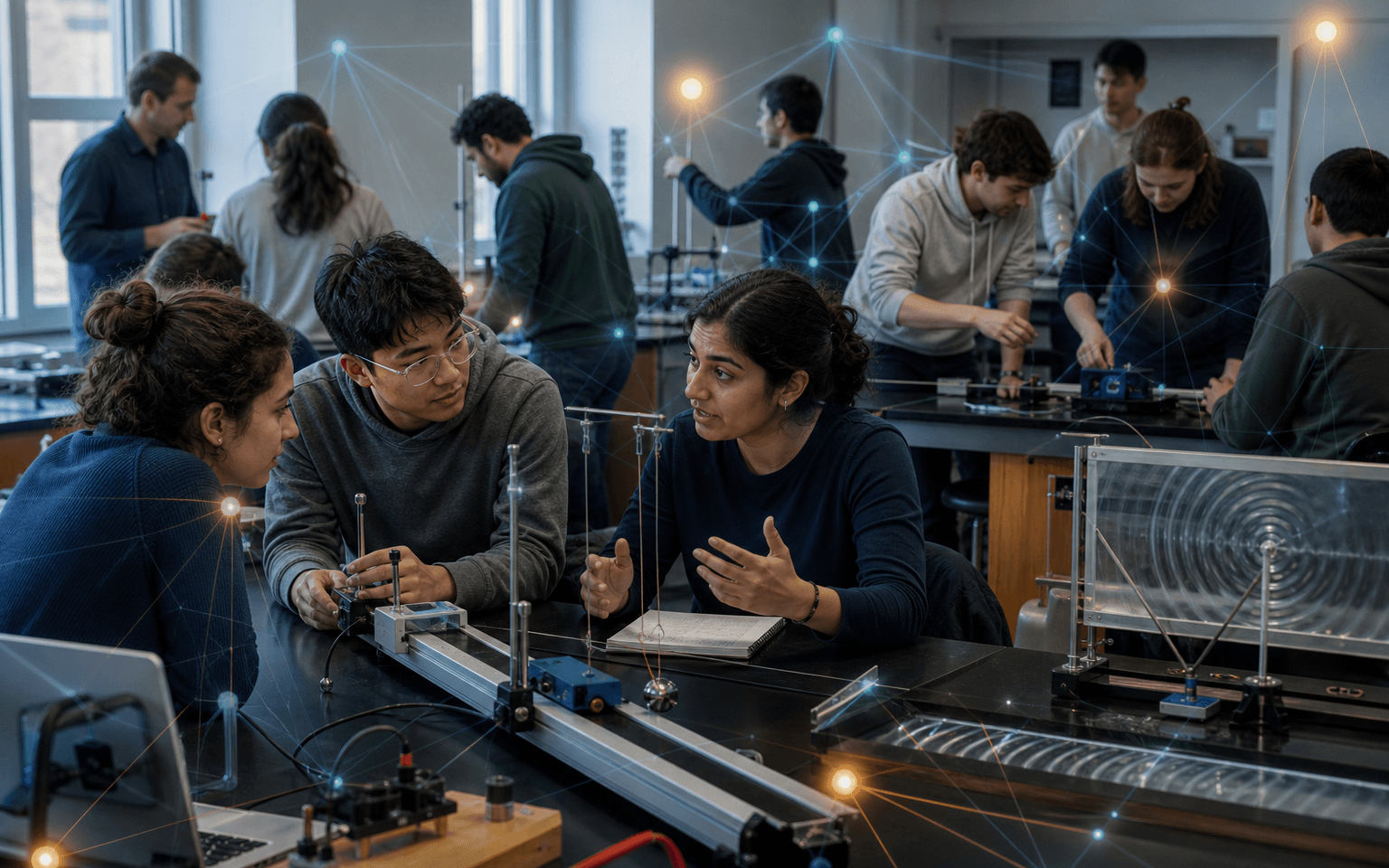
students enrolled in an active-learning introductory physics sequence using Modeling Instruction
Ties
reported in-class learning interactions among students, observed repeatedly near four examinations in each semester
Methods
The authors constructed repeated classroom networks, calculated degree, eigenvector, closeness and betweenness centrality, and used bootstrapped regression models controlling for pre-course GPA to predict subsequent exam and final performance.
Source: Physical Review Physics Education Research
Reviewed summary
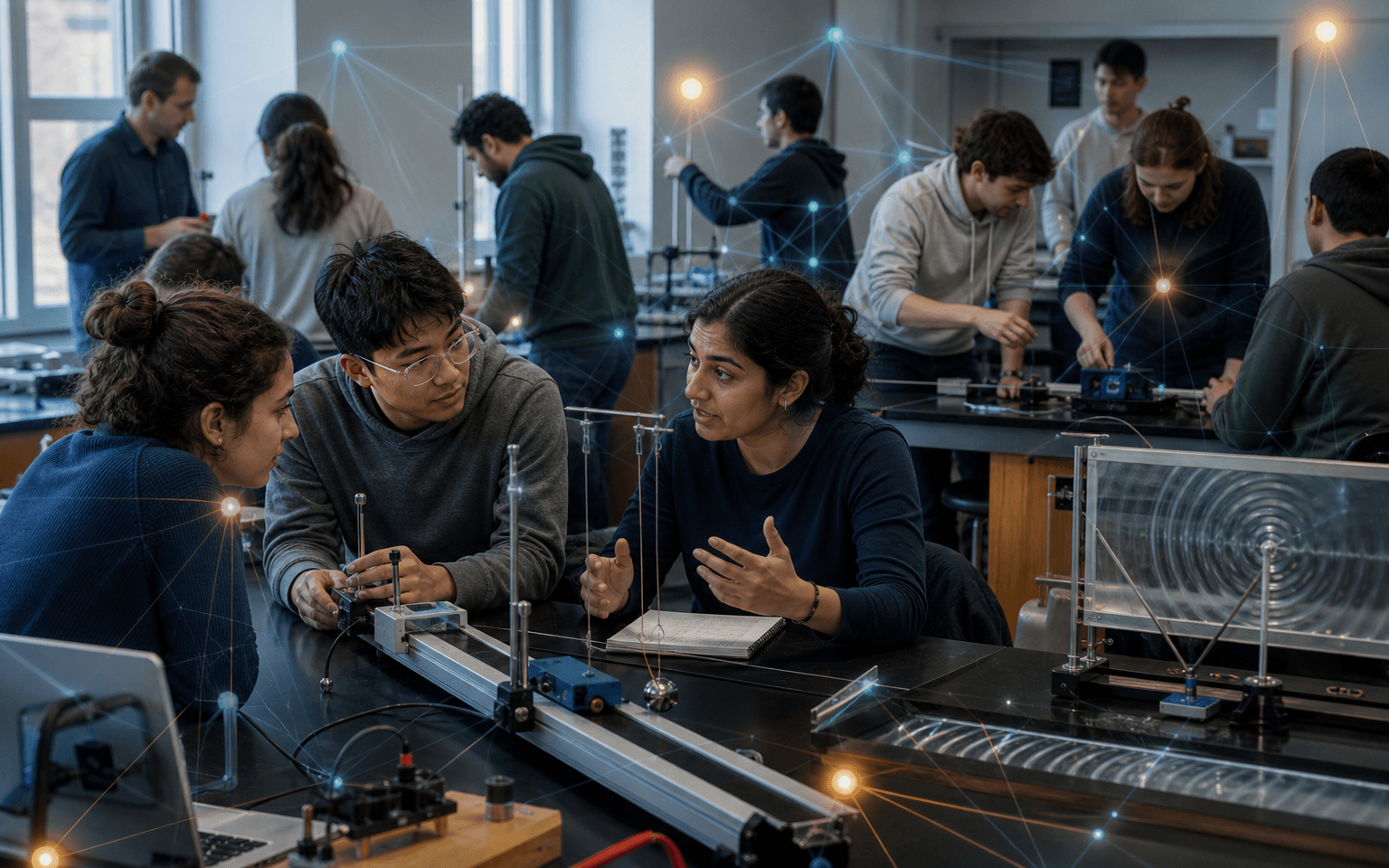
Longitudinal interaction surveys in a two-semester Modeling Instruction physics sequence tracked classroom networks at four exam points per term. Three of four centrality measures predicted later performance after prior GPA controls, and closeness added up to 28 percent explained variance as the community developed. The longitudinal design improves temporal ordering and shows that the usefulness of a network measure can depend on when a learning community has had time to form.
Three centrality measures predicted future performance in at least part of the sequence; closeness provided the largest incremental contribution, and network effects became clearer in the second half as peer structures stabilized. The analysis concerns one active-learning physics context and observational peer interaction. Prior GPA adjustment cannot remove all selection, centrality measures are interdependent and time-sensitive, and prediction does not prove that moving a student toward the network center would cause higher achievement.
SNA
How SNA was used
The study defined students enrolled in an active-learning introductory physics sequence using Modeling Instruction as nodes and reported in-class learning interactions among students, observed repeatedly near four examinations in each semester as ties. The authors constructed repeated classroom networks, calculated degree, eigenvector, closeness and betweenness centrality, and used bootstrapped regression models controlling for pre-course GPA to predict subsequent exam and final performance.
Source
Physical Review Physics Education Research, 15(2), 020150
DOI: 10.1103/PhysRevPhysEducRes.15.020150