How rotating trainee-doctor networks support different kinds of workplace learning
Fiona Sullivan, Reema Saatchi, Ibrahim Younis, Matthew Harris
BMJ Open
Network design
Nodes
trainee doctors working in five successive rotational teams in one acute hospital unit
Ties
directed nominations of colleagues used for advice or emulation in three distinct workplace-learning domains
Methods
The team built separate sociocentric networks for clinical-technical practice, patient-centered care, and work organization, compared positions and patterns across rotations, and integrated those maps with thematic interviews.
Source: BMJ Open
Reviewed summary
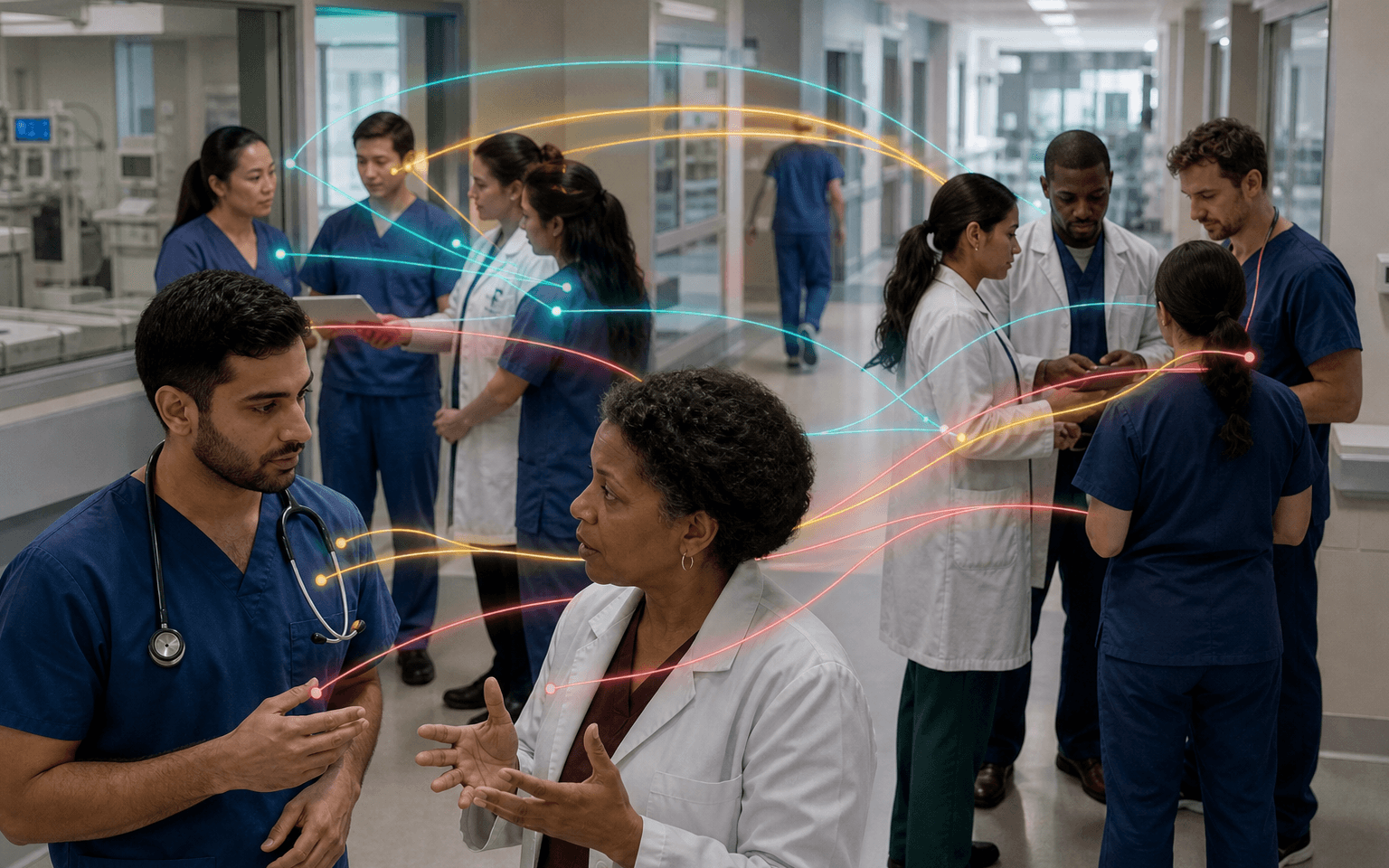
Across five rotational hospital teams over 24 months, 39 trainee doctors completed network surveys and a separate set of 15 trainees were interviewed. Advice and emulation ties differed across clinical-technical, patient-centered, and work-organization learning, showing that one generic network misses domain-specific pathways. The study argues for measuring the actual learning relation of interest and can help placement designers create access to several kinds of expertise rather than promote one supposedly universal mentor.
Learning networks varied by domain: the people approached for technical advice were not automatically the same colleagues observed for patient-centered practice or work organization. The study followed a single acute unit with successive small cohorts; survey and interview samples were different, ties were self-reported, and rotation timing changed who could interact. The mixed-method case supports contextual explanation but not causal or hospital-wide generalization.
SNA
How SNA was used
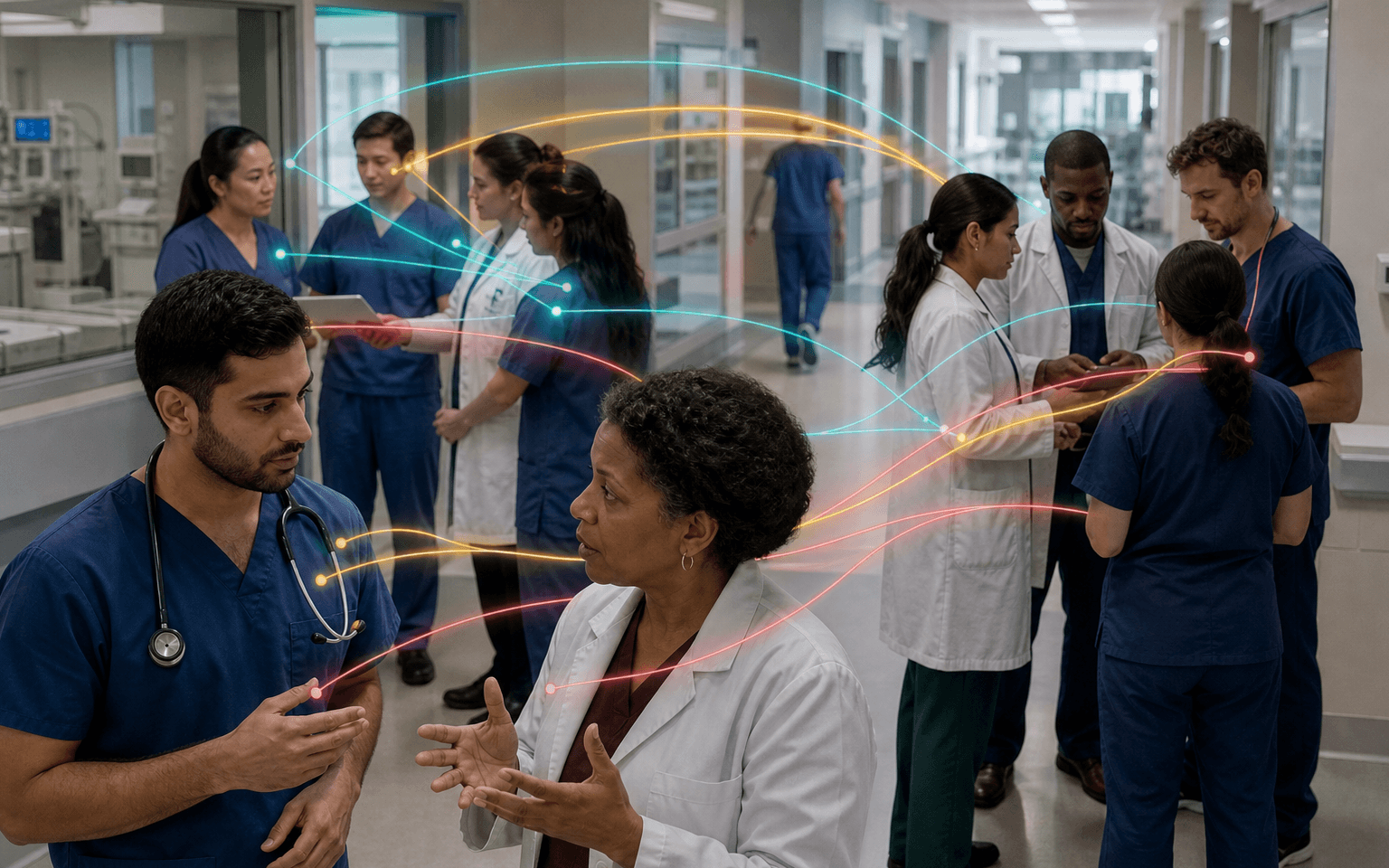
The study defined trainee doctors working in five successive rotational teams in one acute hospital unit as nodes and directed nominations of colleagues used for advice or emulation in three distinct workplace-learning domains as ties. The team built separate sociocentric networks for clinical-technical practice, patient-centered care, and work organization, compared positions and patterns across rotations, and integrated those maps with thematic interviews.
Source
BMJ Open, 9(12), e027039
DOI: 10.1136/bmjopen-2018-027039