Classroom connections in STEM through repeated course co-enrollment networks
Laura R. Ramsey, Wanchunzi Yu, Thomas Kling, Audrey Kling
Journal of College Student Retention: Research, Theory & Practice
Network design
Nodes
338 biology, computer science, and mathematics students in two entering cohorts at a regional university
Ties
undirected weighted co-enrollment links counting exact course sections that a pair of students shared during the first two years
Methods
The researchers compared degree, repeated connections and strongest edge, built major-specific networks, ran 10,000 Monte Carlo random section assignments, and used adjusted models to relate network exposure to grades and graduation.
Source: Journal of College Student Retention: Research, Theory & Practice
Reviewed summary

Two cohorts of 169 STEM students each were connected when they shared an exact biology, computer science, or mathematics course section during their first two years. Repeated co-enrollment occurred more often than 10,000 random section simulations and network features predicted grades and graduation after covariate adjustment. Administrative enrollment data can reveal durable opportunities for peer contact without asking students to recall every classmate, giving institutions a structural view of how curricula repeatedly bring students together.
Students shared repeated course sections more often than random schedules predicted, demographic differences were generally small, and stronger classroom connection measures were associated with academic outcomes after observed controls. Co-enrollment is an opportunity for contact, not evidence of friendship, collaboration, or support. The study used one regional university and observational cohorts; scheduling, major pathways, prior attainment, and unmeasured selection can explain both network position and outcomes.
SNA
How SNA was used
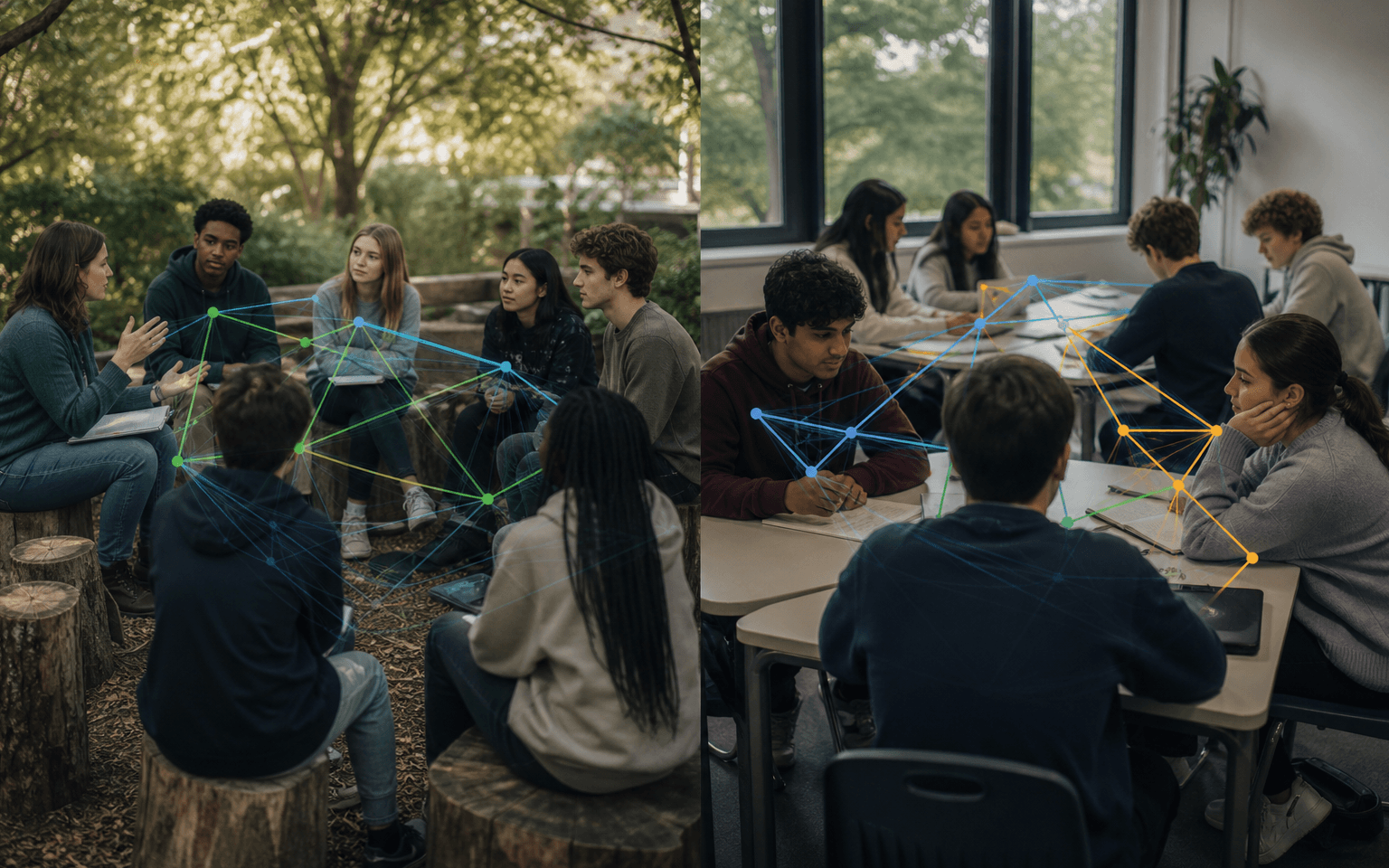
The study defined 338 biology, computer science, and mathematics students in two entering cohorts at a regional university as nodes and undirected weighted co-enrollment links counting exact course sections that a pair of students shared during the first two years as ties. The researchers compared degree, repeated connections and strongest edge, built major-specific networks, ran 10,000 Monte Carlo random section assignments, and used adjusted models to relate network exposure to grades and graduation.
Source
Journal of College Student Retention: Research, Theory & Practice, 27(4), 933-955
DOI: 10.1177/15210251231215787